


WOODEN WICK OR COTTON WICK? WHICH IS BETTER?
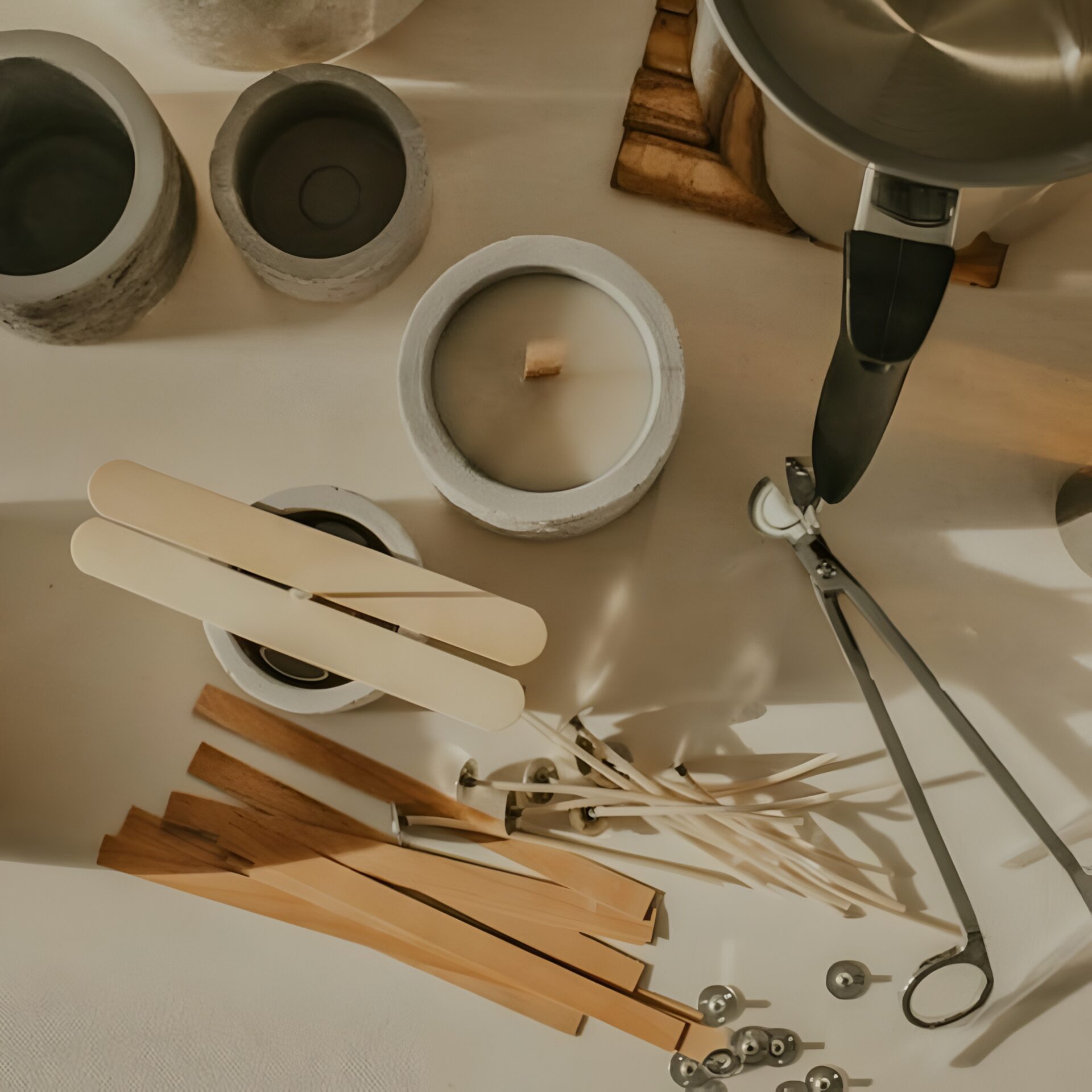
When mentioning scented candlesWhen you think about a candle, you usually consider the fragrance, the type of wax, or the design of the jar. But hidden beneath the exterior of each candle jar is the wick, which sustains the flame and determines the quality of the product. Besides the wick, a perfect candle jar also features... structure from many different components.
On one side is the warm crackling sound of a wooden wick, on the other is the gentle, steady flame of a cotton wick. Among the many types of candle wicks available today, these two always leave candle lovers wondering which to choose.
I. WHAT ARE CANDLE WICKS AND WHY IS CHOOSING THE RIGHT CANDLE IMPORTANT?
1. How does a wick work?
You might not know this: the wick isn't what actually burns in a candle. The wick's job is to draw the molten wax up to the flame through capillary action. It's this vaporized wax that fuels the flame. Cotton wicks and wooden wicks work the same way: both draw molten wax up to the flame using the same capillary mechanism.
2. What are the consequences of choosing the wrong wick?
A wick size that is incompatible with the candle glass diameter will cause the burning process to be skewed, often resulting in the following problems:
- Concave candle: When the flame is too small, it doesn't have enough heat to melt the outer layer of wax. The wax only melts in the center, creating a deep "tunnel." The wax near the sides of the glass remains solid and is wasted.
- Smoke and soot buildup: When the wick is too large or too long, it causes the flame to flare up and burn more intensely. The wax is not completely burned, creating smoke and leaving a layer of soot on the sides of the cup and the inside of the container.
- Weak fragrance: The wax flow is too small, so the fragrance is not released sufficiently.

The wick determines the quality of a scented candle's burn: a candle that burns evenly, produces little smoke, and doesn't dent is ideal.
II. OVERVIEW OF WOOD AND COTTON WICKS IN SCENTED CANDLES
1. What is a cotton wick?
Materials and structure of braided cotton fibers: Cotton wicks are made from natural cotton fibers (or with added paper fibers) that are braided or twisted tightly together to standard dimensions.
Popular in both mass-produced and handcrafted candles: This is a traditional wick type that has been around for a long time. Thanks to its stable burning and ease of processing, cotton wicks are popular in most scented candle brands, across many price segments.
Advantage
- Easily flammable: Cotton wicks ignite very quickly, in just a few seconds with a flick of the wrist or a match.
- Stable burning: The flame is even and less likely to go out when the correct wick size is chosen to match the diameter of the wax jar.
- Low cost: Low raw material costs, suitable for mass production or making handmade candles at home.
Disadvantages
- Wick fungus: The wick tip is covered in black charcoal, which can cause smoke.
- Prone to bending and falling: If the wick is left too long without trimming, the tip of the wick often swells and easily tilts, causing the candle to become off-center.
-

Traditional cotton wicks are common in both mass-produced and handcrafted candles.
2. What is a wooden wick?
Originating from thinly sliced natural wood: Wooden wicks are cut from natural wood (usually pine, cherry, or maple) and processed into thin strips, sometimes by joining two layers of wood together to create optimal thickness and burning speed.
Trends in the high-end scented candle segment: Wooden wicks offer a modern and rustic feel. They are often used in high-end art candles and relaxation candles to provide a multi-sensory experience.
Advantage
- The crackling sound: Similar to the sound of burning wood in a fireplace. It creates a cozy feeling and is why many people prefer candles with wooden wicks.
- The flame is wide and beautiful: The wooden wick creates a flat, horizontal flame that dances artistically.
- High aesthetic appeal: Makes the candle jar look more luxurious, unique, and fashionable.
Disadvantages
- Difficult to ignite on the first try: Due to its wooden nature, it requires a little longer ignition or tilting the candle jar when lighting.
- Higher cost: The cost of purchasing wooden wicks and specialized wick holders is usually higher than that of cotton wicks.
-
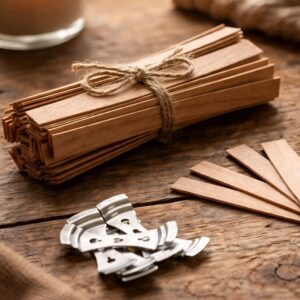
The wooden wick provides a wide flame, a cozy crackling sound, and a stylish look for the candle jar.
III. DETAILED COMPARISON OF THE USES OF CANDLE WICKS
Burning capacity and diffusion rate of essential oils
- Fragrance diffusion ability: Both types diffuse scent well if the correct size and wax weight are chosen. However, wooden wicks generally generate more heat at the surface, allowing essential oils to evaporate faster and more intensely in a shorter time. For more details, you can refer to the article on... fragrance intensity when cool and when the candle is lit. Gili's.
- Flame area and wax melting speed: A wooden wick produces a flat, horizontal flame, allowing the wax to melt quickly and evenly across the entire rim of the jar. A cotton wick, on the other hand, creates a smaller, rounder flame. The time it takes to form a wax pool may be slightly slower depending on the jar diameter.
Sensory experience
- The crackling sound effect of a wooden wick: If you're looking for a stress-relieving therapy after a stressful workday, the pleasant "crackling" sound of the wooden wick combined with the light will stimulate your hearing and sight to the maximum.
- The gentle and soothing feel of cotton wicks: Cotton wicks are the perfect choice for those who prefer absolute quiet and don't want to be disturbed by any noise while reading or sleeping.
Safety, smoke and soot
- Amount of soot released into the air: Both types can produce some black smoke if you leave the wick too long.
- Wick trimming requirements: Wooden wicks require you to remove the black ash on top before each use to prevent the wick from going out prematurely and to minimize smoke. Cotton wicks also need similar trimming to keep the flame at a safe height (approximately 0.5 cm).
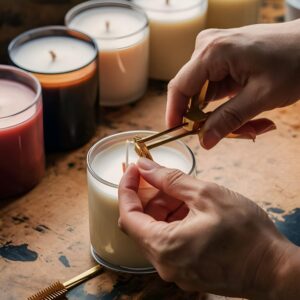
Trimming the wick to about 0.5cm in length helps stabilize the flame and reduce smoke and soot.
IV. CHOOSING THE WICK BY WAX TYPE
1. Soy wax
- Suitable for: Wooden wicks and cotton wicks
- Features: This is the most popular type of wax. The cotton wick provides stability and ease of use, while the wooden wick creates a relaxing crackling sound.
- How to choose: Select the wick size based on the diameter of the glass opening and the amount of essential oil to be added.
2. Paraffin wax
- Best suited for: Cotton wicks
- Features: Paraffin wax is very easy to combine with cotton wicks due to its availability in many sizes.
- Note: You can use a wooden wick, but try this with 1-2 sample jars first. Make sure the flame burns steadily and doesn't go out midway before producing in larger quantities.
3. Beeswax, palm wax, coconut wax
- Characteristics: Beeswax is quite hard and dense. It usually requires a larger-than-normal wick to generate enough heat to melt it. Palm wax and coconut wax also have their own specific densities.
- Advice: Refer to the wax supplier's sample chart and always make a test batch before mass-producing.
4. Gel wax or wax blend
- Characteristics: This group of waxes has a unique composition, retains heat for a long time, and is transparent.
- Advice: Do not use the same size chart for soy wax or paraffin wax. Always follow the manufacturer's instructions for the specific type of wax.
Principles for choosing candle wick size
- Type of wax: Hard wax requires a larger wick than soft wax.
- Glass diameter: The wider the glass, the larger the wick should be.
- Essential oil concentration: The more essential oil you use, the more carefully you need to experiment with wick size.
V. CHOOSE THE WICK SIZE ACCORDING TO YOUR NEEDS
- When buying candles as gifts or for decoration, choose wooden wicks for their relaxing crackling sound. The flat flame adds a touch of elegance and modernity to the design.
- Beginner candle makers: Start with cotton wicks because they are inexpensive. They are easy to find in various sizes and easy to work with; wooden wicks hold their center well but require patience when lighting.
- Mass production: Large-scale factories prioritize cotton wicks to optimize costs. Meanwhile, high-end candle lines are better suited to wooden wicks to enhance product value.
- For a long-lasting and intensely fragrant burn: The most important thing is to choose the right wick size and carefully experiment with your formula. Wooden wicks have the advantage of consuming wax slowly. Standard-sized cotton wicks still diffuse fragrance very strongly.
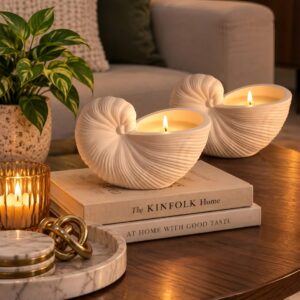
Scented candles not only create a pleasant fragrance but also serve as decorative items that help make a space feel warmer and more inviting.
VI. GUIDELINES FOR PROPER CANDLE WICK CARE TO ENSURE LONG-LASTING AND BEAUTIFUL CANDLE BURNING
To keep your candles bright, fragrant, and free from black smoke, proper wick care is extremely important:
- Trim the cotton wick: Always trim the wick to about 6mm before each use. Remove any black carbon deposits at the tip of the wick. Trim only when the candle has completely cooled.
- Trim the wick: Keep the wick length between 3-5mm. Do not let it get too long. An excessively long wick will prevent the wax from being absorbed, causing the flame to weaken and eventually go out. Be sure to trim away any black ash before relighting.
- First burn and maximum burning time: For the first burn, let the candle burn long enough until all the wax on the surface melts evenly to the sides of the glass. Avoid letting the candle drip down in subsequent burns. Each burn should only last 3 to 4 hours, or flexibly according to the manufacturer's instructions to ensure the candle lasts longer.
VII. Frequently Asked Questions About Candle Wicks
1. Are wooden wicks better than cotton wicks?
Each wick has its own advantages. Wooden wicks stand out for their crackling sound, low flame, and aesthetics. Cotton wicks are notable for their variety, affordability, and ease of finding the right size. The best option is one that's the correct size for your wax and candle jar.
2. Can cotton wicks develop "fungus" at the tip, and how can this be fixed?
Yes, cotton wicks are prone to developing a mushroom-shaped black ash at the tip after a while of burning. This is due to incomplete burning of the wax or an excessive amount of essential oil. The solution is simple: just wipe it clean with a paper towel or cut off the mushroom-shaped tip with scissors before each subsequent use.
3. Why do wooden wicks make such a loud crackling sound or shoot out sparks?
The pleasant crackling sound is characteristic of a wooden wick. However, if the sound is too loud or sparks fly, it's usually because the wick is too thick, hasn't been properly waxed, or hasn't been trimmed neatly before burning.
4. Is it possible to cut a wooden wick yourself using regular scissors?
Regular scissors can be used, but with thick wooden wicks. Using specialized wick shears will result in a clean cut, prevent wood chips from falling into the wax, and ensure a more even flame.
5. How do I know if the wick size I'm currently using is too small or too large?
If the flame is too small, burning weakly, and not hot enough to melt the wax surface all the way to the sides of the glass, causing it to sag, it means the wick is too small. Conversely, if the flame is too high, burning fiercely, producing a lot of black smoke and melting the glass jar too quickly, then the wick is too large.
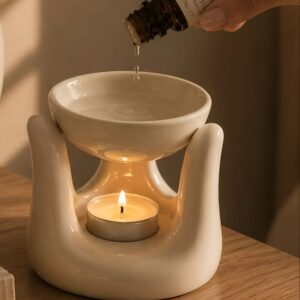
The small candle heats the essential oil, allowing the fragrance to gently spread throughout the space.
VIII. CONCLUSION
There's no single best wick; there's only the wick that's right for your candle jar. Each offers unique sensory experiences and advantages. While cotton wicks score points for their stability, ease of use, and cost-effectiveness, wooden wicks win over candle lovers with their warm, inviting sound and modern, elegant look.