

FRAGRANCE FIXERS IN PERFUMES – THE SECRET TO LONG-LASTING SCENT
The longevity of a perfume's scent depends heavily on its fixatives, a group of ingredients that slow down the evaporation of fragrance molecules. The same scent can last only a few dozen minutes in some bottles, while others linger on clothing until the next day. Much of this difference stems from how the perfumer uses these fixatives. Understanding this concentrated structure more deeply reveals the key components of perfumes. perfume essential oils They usually retain their fragrance the longest because they preserve the originality and concentration of their base fragrance molecules.
In this article, you will learn what fixatives in perfumes are, what types there are, whether they are safe, and how to choose perfumes that last a long time.
I. WHAT ARE FLAVORINGS?
Fragrance fixatives are a group of natural or synthetic ingredients added to a formula to slow down the evaporation rate of light fragrance molecules. This prolongs the scent's longevity and helps maintain its balance for longer.
The fragrance pyramid consists of three layers: top notes, heart notes, and base notes. The fixatives are primarily found in the base notes. Due to their large molecular weight, they evaporate slowly, allowing the more volatile notes to last longer and making the base notes more distinct.
Distinguishing between fixatives and fragrance ingredients isn't always straightforward. Many ingredients, such as sandalwood, patchouli, or musk, both contribute to the scent and act as fixatives.
Natural ingredients are often used in base notes to help the fragrance evaporate more slowly.
II. THE ROLE OF FRAGRANCES IN PERFUME FORMULATIONS
Without fixatives, a fragrance creation might only last a few dozen minutes. Fixatives perform three main technical roles:
- Stabilizing the rate of evaporation: Citrus, green, or herbal essential oils evaporate very quickly. A fixative slows this process, allowing the fragrance notes to appear sequentially.
- Fragrance layering: Fixatives help the fragrance transition smoothly from top notes to middle notes and then settle into base notes, preventing the layers from feeling disjointed.
- Improved longevity and diffusion: Fragrance fixatives enhance the ability of aromatic compounds to adhere to skin and fabric fibers. Some also contribute to the fragrance spreading around a person, leaving a "fragrance trail" as you walk by.
III. MECHANISM OF ACTION OF FRAGRANCES IN THE SKIN
From a physicochemical standpoint, this mechanism is based on the following principles:
- High molecular weight, low vapor pressure: The molecules of the fixative are heavier than the molecules that create lighter fragrances like citrus or herbs.
Because they are heavy, they are less likely to evaporate at body temperature (around 37 degrees Celsius) and stay on the skin longer. Some substances also contribute to the fragrance spreading around the body, leaving a "fragrance trail" as you walk by.
- Slowing down the release of light fragrances: When mixed with alcohol and fragrances, fixatives help prevent light scent molecules from evaporating too quickly.
This helps the fragrance last longer and transition more smoothly from top to base notes.
- The fragrance transitions more smoothly: Thanks to these two mechanisms, the scent lasts longer and transitions from top to base notes evenly, without any abrupt or interrupted transitions.
Additionally, the actual longevity of a fragrance is also affected by skin type (dry skin tends to retain scent less well than oily skin), ambient temperature, and how you apply it.
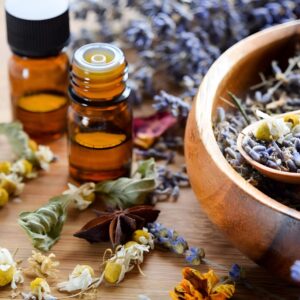
Essential oils and dried herbs are natural fragrance ingredients that have long been used in the perfume industry.
IV. CLASSIFICATION OF COMMON FLAVORINGS
Fragrance fixatives are divided into two groups based on their origin:
1. Natural flavoring agents
- Animal origin:
Ambergris: A secretion from sperm whales, with a salty, earthy scent of the sea, renowned for its ability to fix and soften fragrances.
Natural musk, civet, castoreum: Warm, rich, leathery scent. Adds depth and allure to the fragrance.
These ingredients are rare, expensive, and restricted for conservation reasons, so they are rarely used today.
- Plant origin:
Aromatic resins: Benzoin, myrrh, frankincense. They both fixative and create a warm, sweet, oriental character.
Wood and Roots: Patchouli, sandalwood, orris root, vetiver. This group is heavy, has good longevity, and provides depth to the base notes.
2. Synthetic flavoring agents
Due to limitations in natural resources, the modern fragrance industry uses many synthetic molecules:
- Ambroxan: A substitute for ambergris, it has a dry, clean amber scent and high longevity. It's an ingredient found in many modern perfumes.
- Synthetic musk (white musk, Galaxolide, Habanolide): MIt smells clean and soft like freshly washed fabric, a substitute for animal-derived musk.
- Iso E Super: A light cedarwood shade, transparent in color, and helps increase projection around the wearer.

Natural fragrance fixatives in perfumes: herbs, lavender, cinnamon, ginger, and dried bark.
V. ARE FRAGRANCES SAFE AND DO THEY HARM THE SKIN?
Many people think that chemical fragrances are harmful. In reality, safety depends on the specific ingredients and manufacturing standards, not on whether those ingredients are natural or synthetic.
- IFRA standards: The International Fragrance Association (IFRA) sets safe limits for fragrances, including banned substances and substances with restricted concentrations. Reputable brands typically adhere to these standards.
- Allergy risk: Allergies can arise from both natural and synthetic ingredients. For those with sensitive skin, it is recommended to test the spray on the inside of the wrist and wait approximately 24 hours before applying it to a larger area.
- Choose a reliable source: Avoid counterfeit products with unknown ingredients and origins. If itching, redness, or rash occurs, discontinue use and rinse thoroughly. For severe symptoms, consult a doctor.
VI. HOW TO IDENTIFY LONG-LASTING PERFUMES
To choose a long-lasting perfume, you should consider the following four factors:
1. Essential oil concentration
The higher the concentration of essential oils, the longer the perfume usually lasts.
- Eau de Toilette (EDT): Approximately 5-15 ml, suitable for daytime use and hot weather.
- Eau de Parfum (EDP): Approximately 15-20 oz. It usually lasts longer than EDT.
- Parfum/Extrait: This fragrance, like 20%, usually has the longest lasting scent.
2. The transformation of fragrance layers
A good perfume will have a clear transition from top to base notes. The base notes should be warm and pleasant, not turning into a harsh, chemical smell. If after a few hours only a "harsh" or "empty" scent remains, the perfume may lack a solid base.
3. Fragrance Group
- Long-lasting: Woody, amber, oriental, and musk fragrances. These groups contain more heavy ingredients, so the scent lasts longer.
- Faster fading: Citrus and aquatic fragrances. These two groups are fresh and suitable for hot weather, but the scent tends to fade faster.
4. Test on skin first.
Spray a small amount onto your wrist and wait a few hours to fully appreciate the top notes to the base notes. The test strip only gives an initial impression and doesn't accurately reflect how long it lasts on the skin, as each skin type reacts to fragrances differently.
Besides the concentration of essential oils or the layers of fragrance, the application method also affects longevity. If you prefer a more subtle scent, dab directly onto pulse points instead of spraying widely. Designs like... roll-on perfume oil This will help control the amount of essential oil remaining on the skin with extreme precision and ensure it lasts all day long.
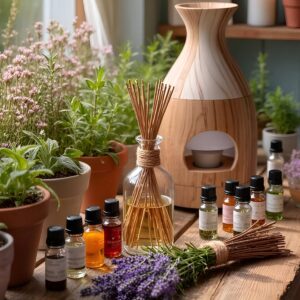
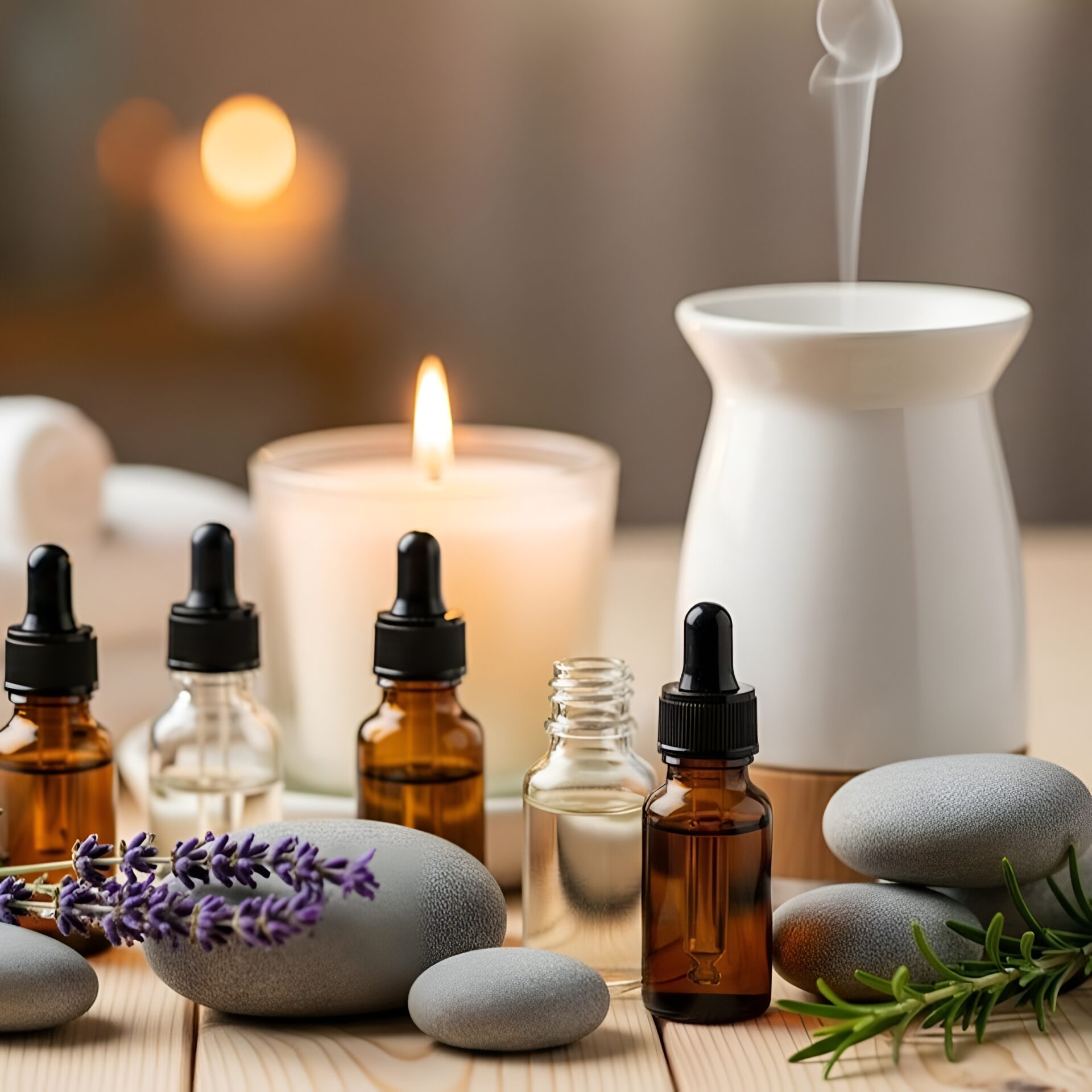
How to identify long-lasting perfumes: essential oils, diffuser sticks, and herbs.
VII. ANSWERS TO QUESTIONS ABOUT FRAGRANCE FIXATION IN PERFUMES
1. Are fragrance fixatives harmful to the skin?
Most fragrance fixatives in genuine perfumes comply with safety standards, so using them correctly is fine. However, some ingredients (both natural and synthetic) can still cause irritation in people with sensitive skin. You should test it on your wrist and wait about 24 hours before using it widely.
2. Which is better: natural or synthetic flavoring agents?
There is no single best type. Natural fragrances (resin, sandalwood, patchouli, etc.) offer depth but are expensive and their scent changes seasonally. Synthetic fragrances (Ambroxan, white musk, Iso E Super, etc.) are stable, reasonably priced, and easy to produce. Most perfumes today combine both.
3. Do perfumes without fixatives last long?
They often have poorer longevity and fade faster. However, many base notes, such as sandalwood or musk, both create the scent and act as fixatives, making it difficult to completely separate them.
4. How can I tell which perfumes last the longest?
You can rely on the concentration of essential oils (EDP and Parfum usually last longer than EDT), the fragrance group (woody, amber, oriental, musk), and the base notes of the bottle. The surest way is to test it on your skin and wait a few hours.
5. How can I make my perfume last longer on my skin?
Moisturize your skin before spraying, as dry skin causes the fragrance to dissipate more quickly.
Spray onto warm areas such as wrists, behind the ears, and the nape of the neck, where body temperature helps the fragrance spread evenly.
Do not rub your wrists together, as friction breaks down the fragrance's structure and causes the scent to fade quickly.
Store the bottle in a cool, dry place, away from sunlight and high temperatures to prevent the perfume from deteriorating.
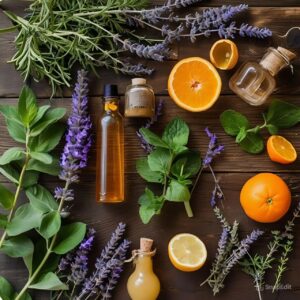
Answering questions about fixatives in perfumes.
VIII. CONCLUSION
Fixatives are a group of ingredients that help fragrances last longer and harmonize the different layers of scent. Whether natural or synthetic, each type has its own advantages and is often combined to create a complete perfume.
When choosing perfume, pay attention to these points. essential oil concentrationFragrance notes, base notes. Always test on skin before buying to find a scent that suits you and lasts a long time.